Mycelium between Sculpture and Material Ecology
Table of Contents
My artistic research explores oyster mushroom mycelium (Pleurotus ostreatus) as a living sculptural material. Unlike a passive medium, mycelium responds to moisture, temperature, nutrients, time and the structure of its substrate. I establish frameworks and conditions for growth, but the resulting form is never entirely predetermined. The fungus binds plant fibres, follows or resists constructed armatures, develops surfaces and alters the density, stability and porosity of each object. Form therefore emerges through a negotiation between artistic intervention, biological agency and milieu.
This process shifts my focus from shaping a material towards shaping with a living system. Adaptation periods, interrupted growth, contamination and drying are not merely technical obstacles; they reveal the material’s own temporality and capacities. Through moulds, cellulose, hemp substrates and lightweight wooden armatures, I develop speculative bodies that evoke organs, tissues or unfamiliar organisms without reproducing natural forms. Mycelium becomes a material actor: simultaneously medium, collaborator and agent of transformation.
 Read more about my artistic research with mycelium, supported by a working grant from the Cultural Foundation of the Free State of Saxony from April to June 2026.
1. Material Experiments and Mycelial Bodies
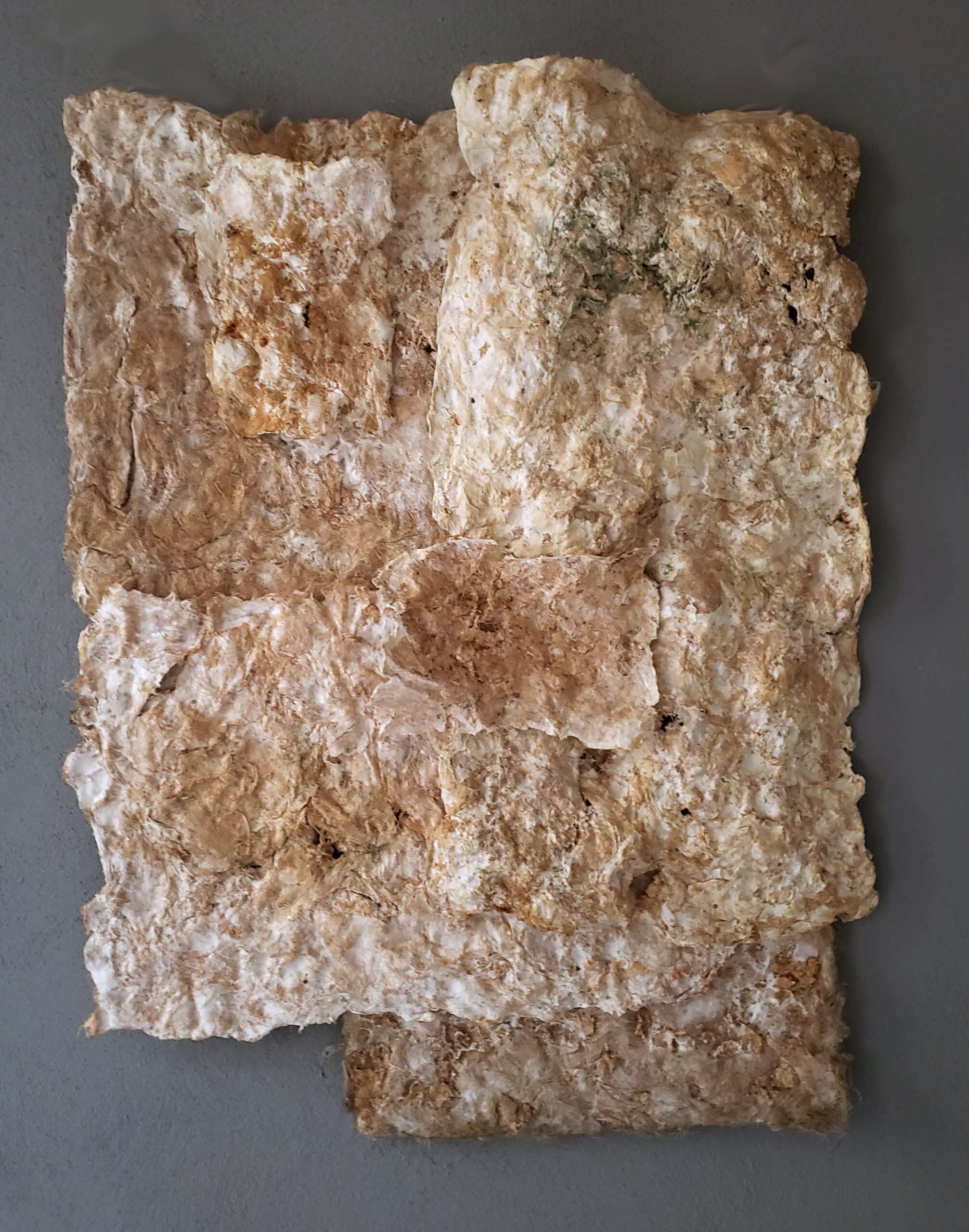
auf Hanfsubstrat kultiviert, getrocknet
75 x 100 cm
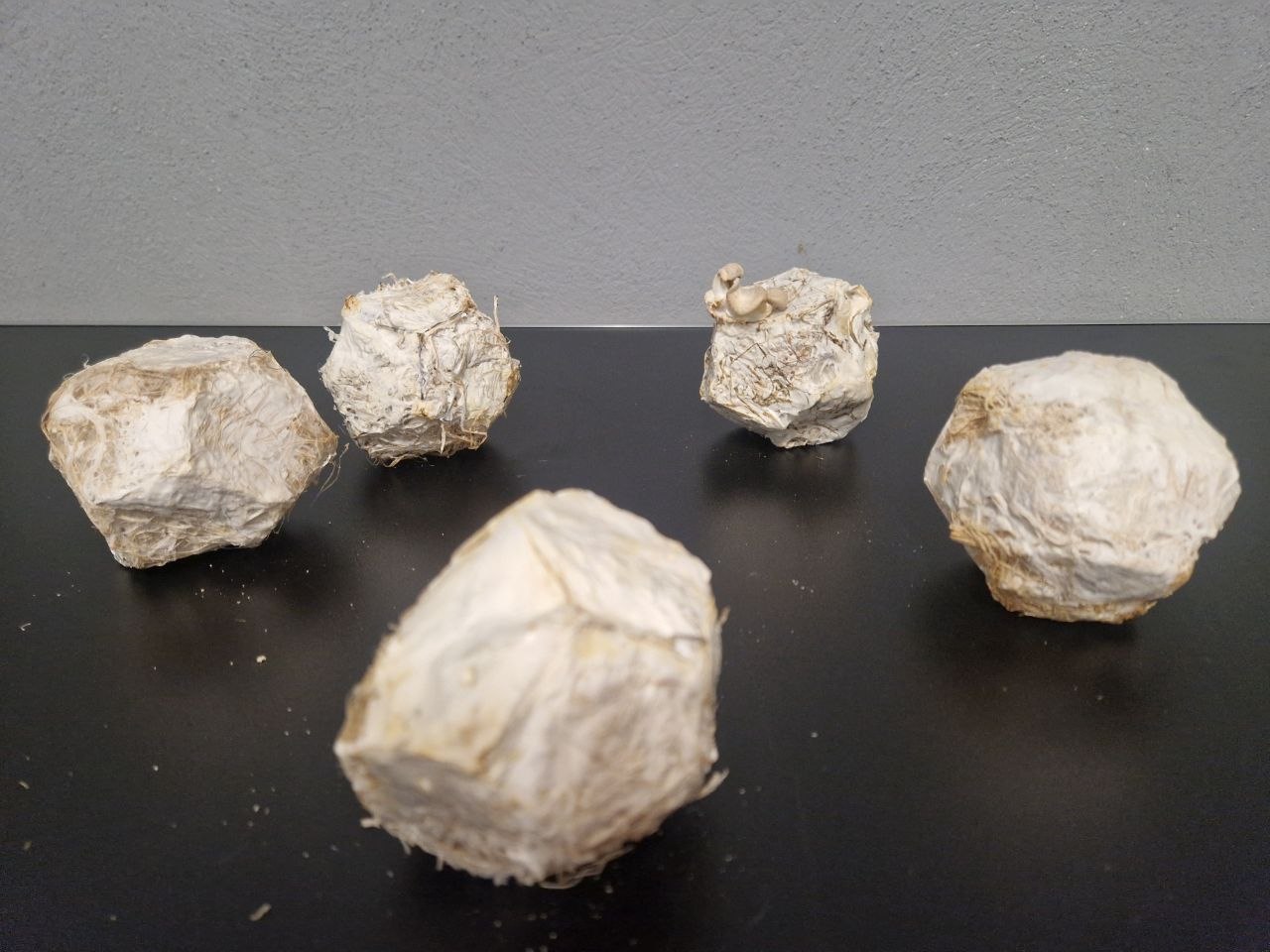
My material research centres on Pleurotus ostreatus cultivated on hemp-based substrates and other plant residues. In the polyhedra shown here, geometric moulds establish an initial spatial order. Despite comparable cultivation conditions, each body develops a distinct surface, density, colour and degree of colonisation. The resulting forms emerge through an interplay between predetermined geometry and biological indeterminacy: the mould defines a basic structure, while the living material modifies it through its own growth dynamics.
2. From Skeleton to Living Body
Radiolarian-inspired Mycelium Body
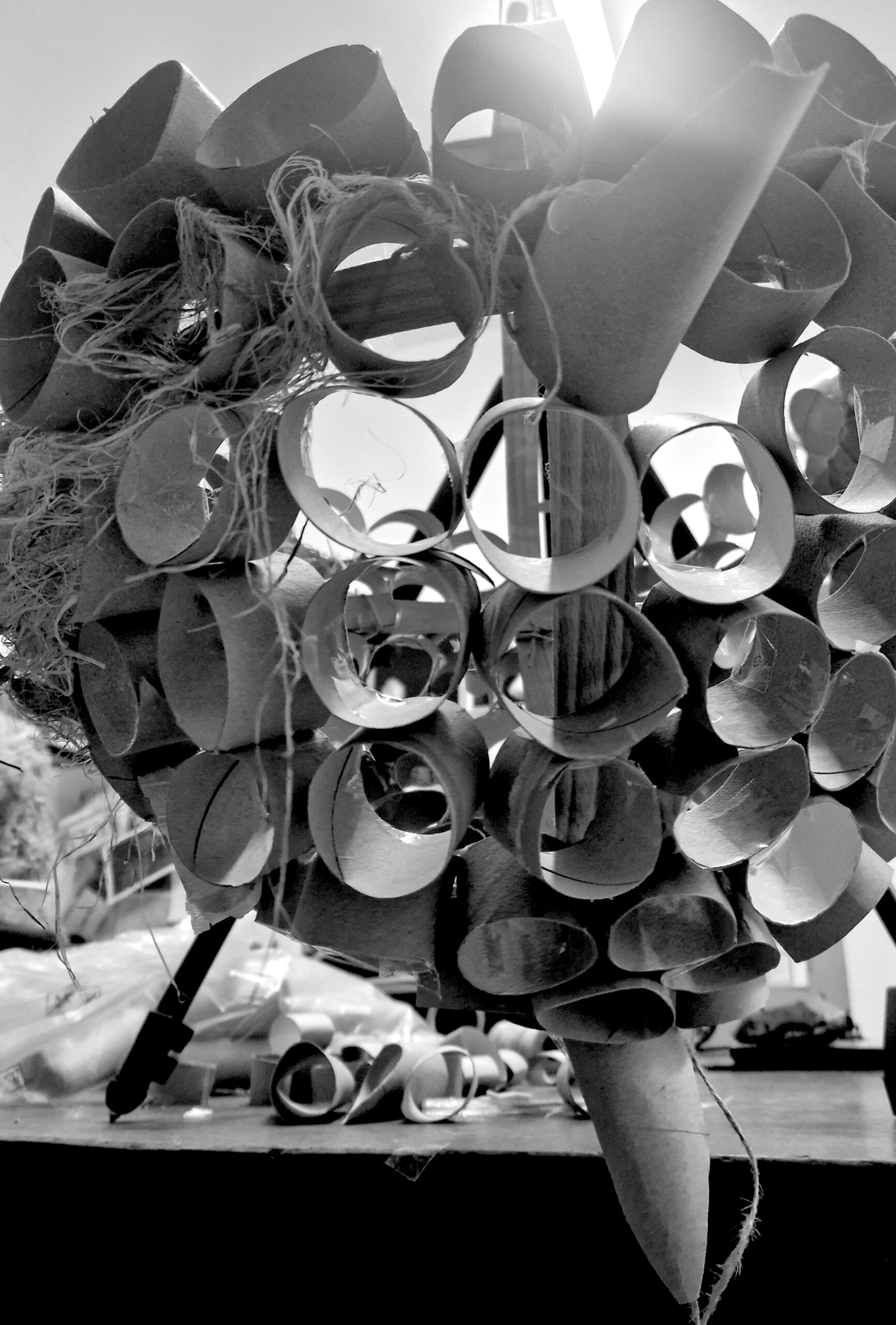
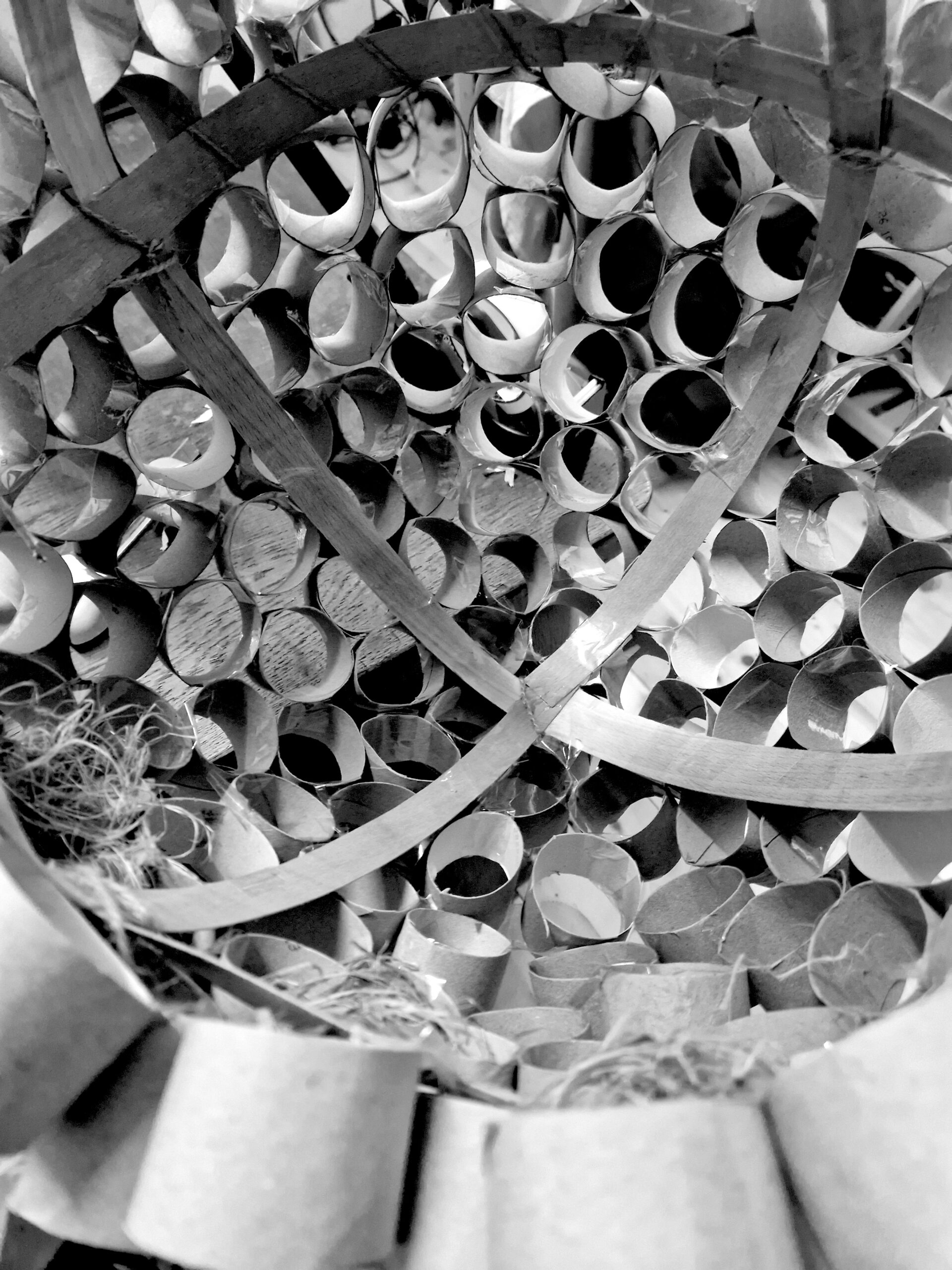
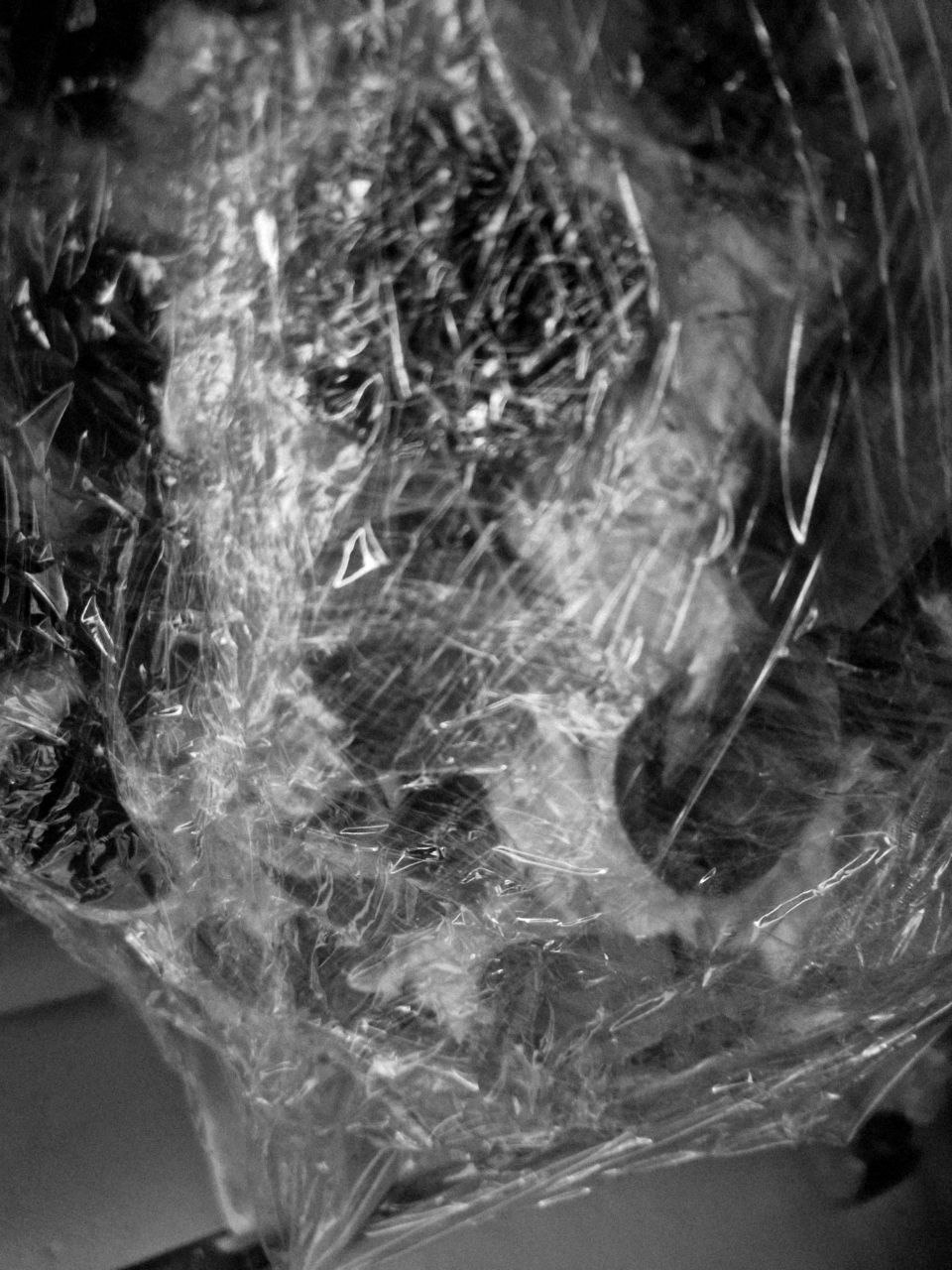
Radiolarian-inspired mycelium body — work in progress, 2026.
Cardboard tubes, beech veneer, plant fibres and Pleurotus ostreatus mycelium. The porous armature establishes a spatial framework that the fungus gradually connects, narrows and transforms.
Mycoacoustic Breathing Organ
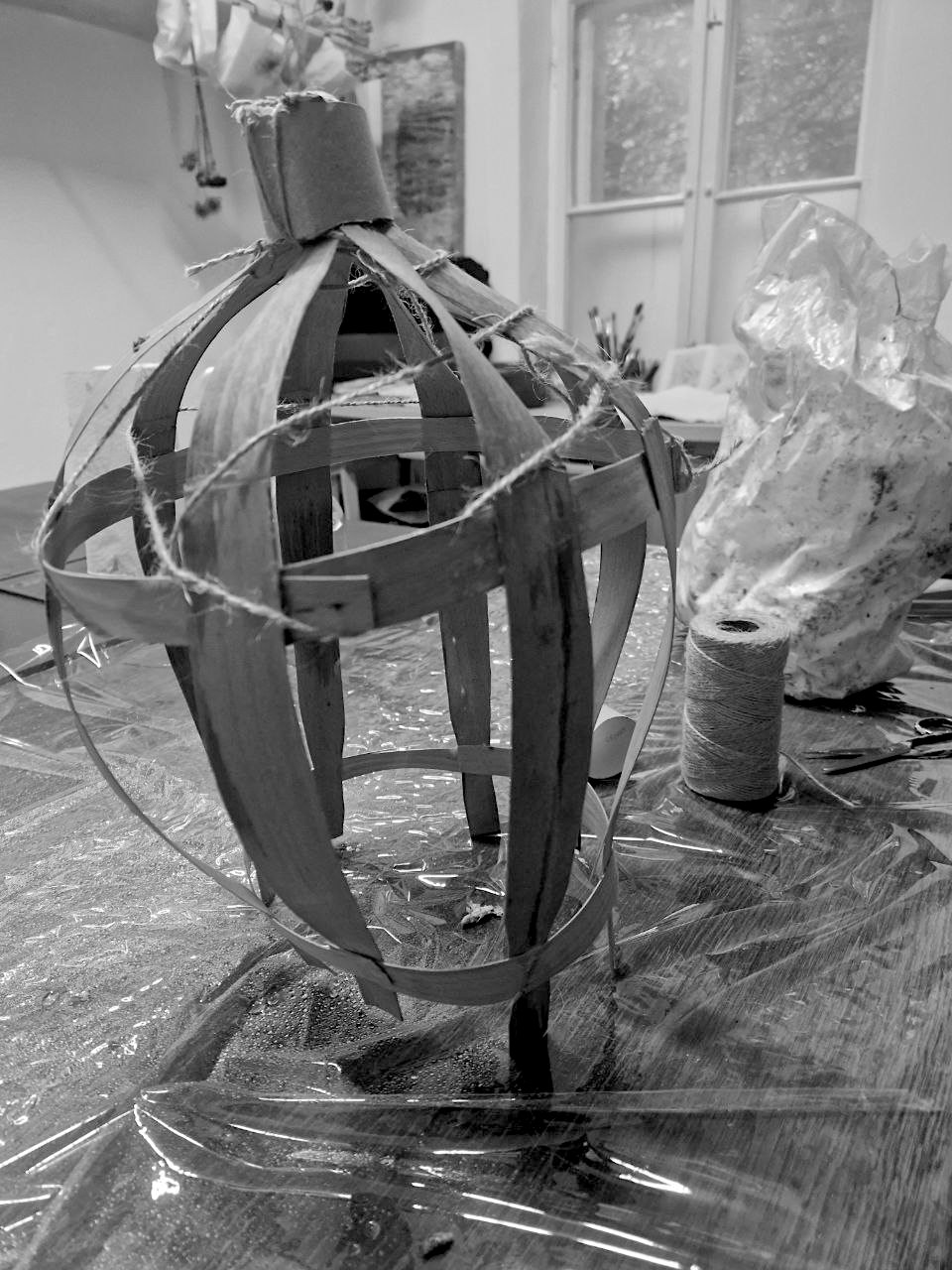
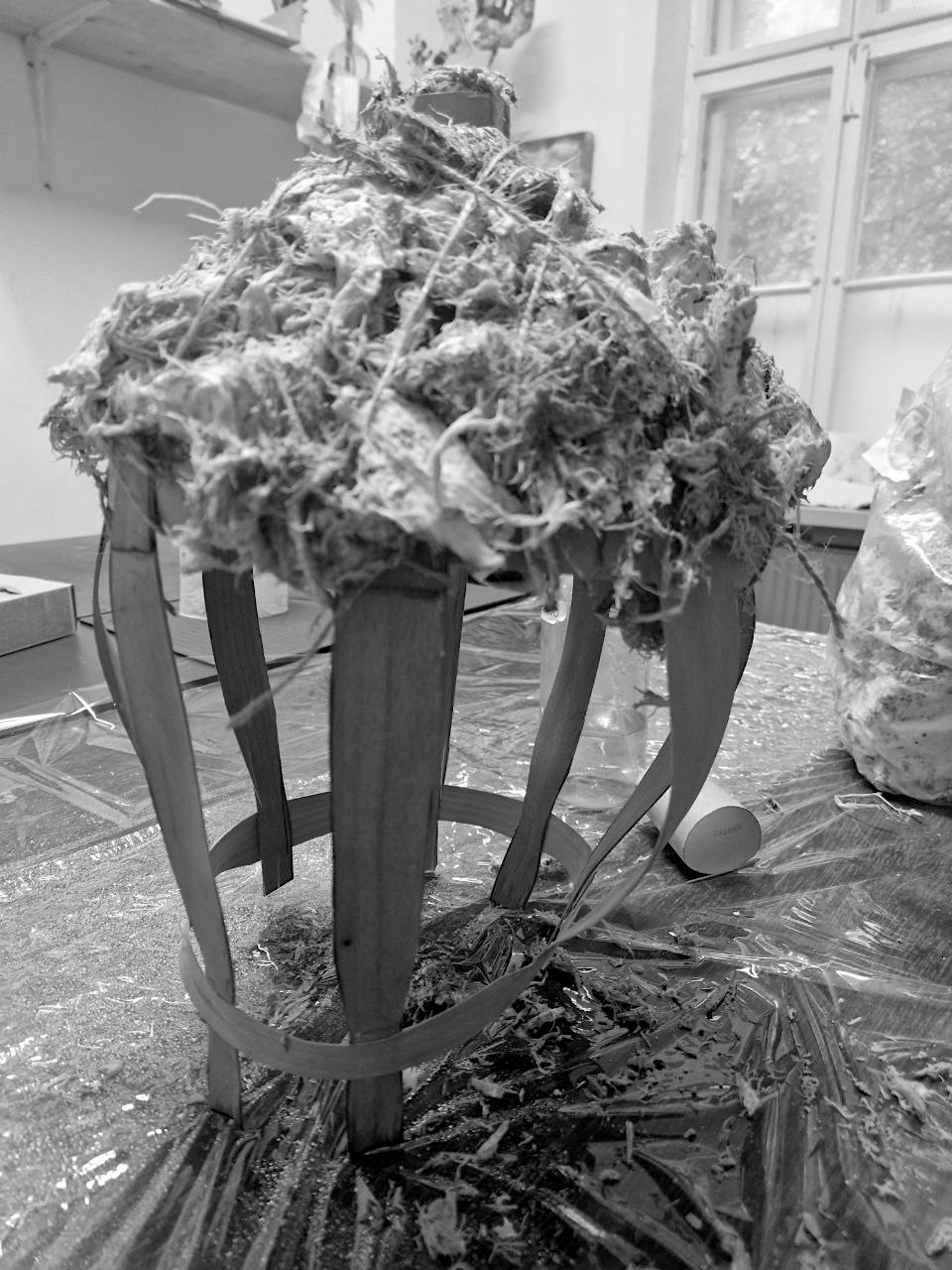
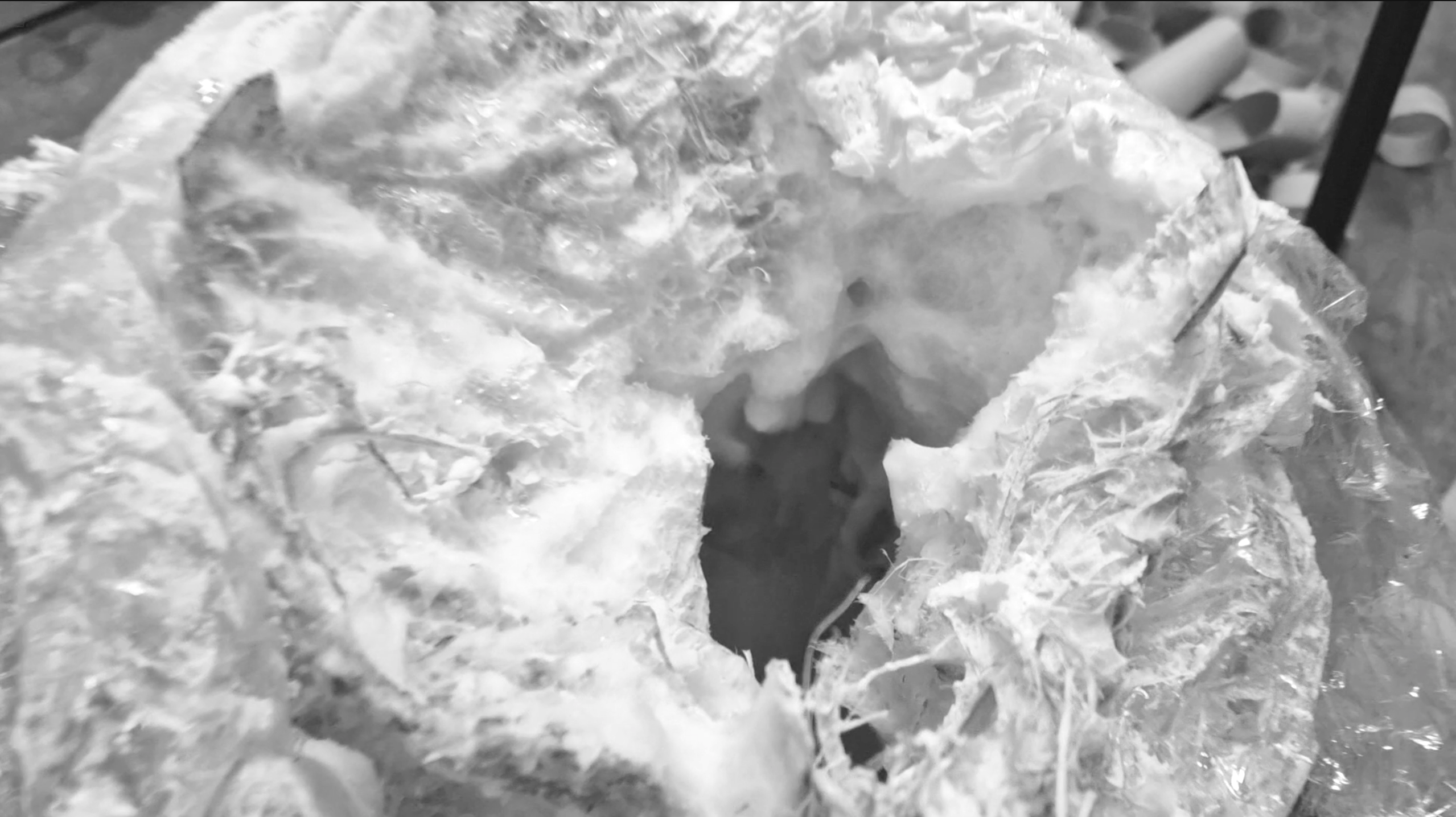
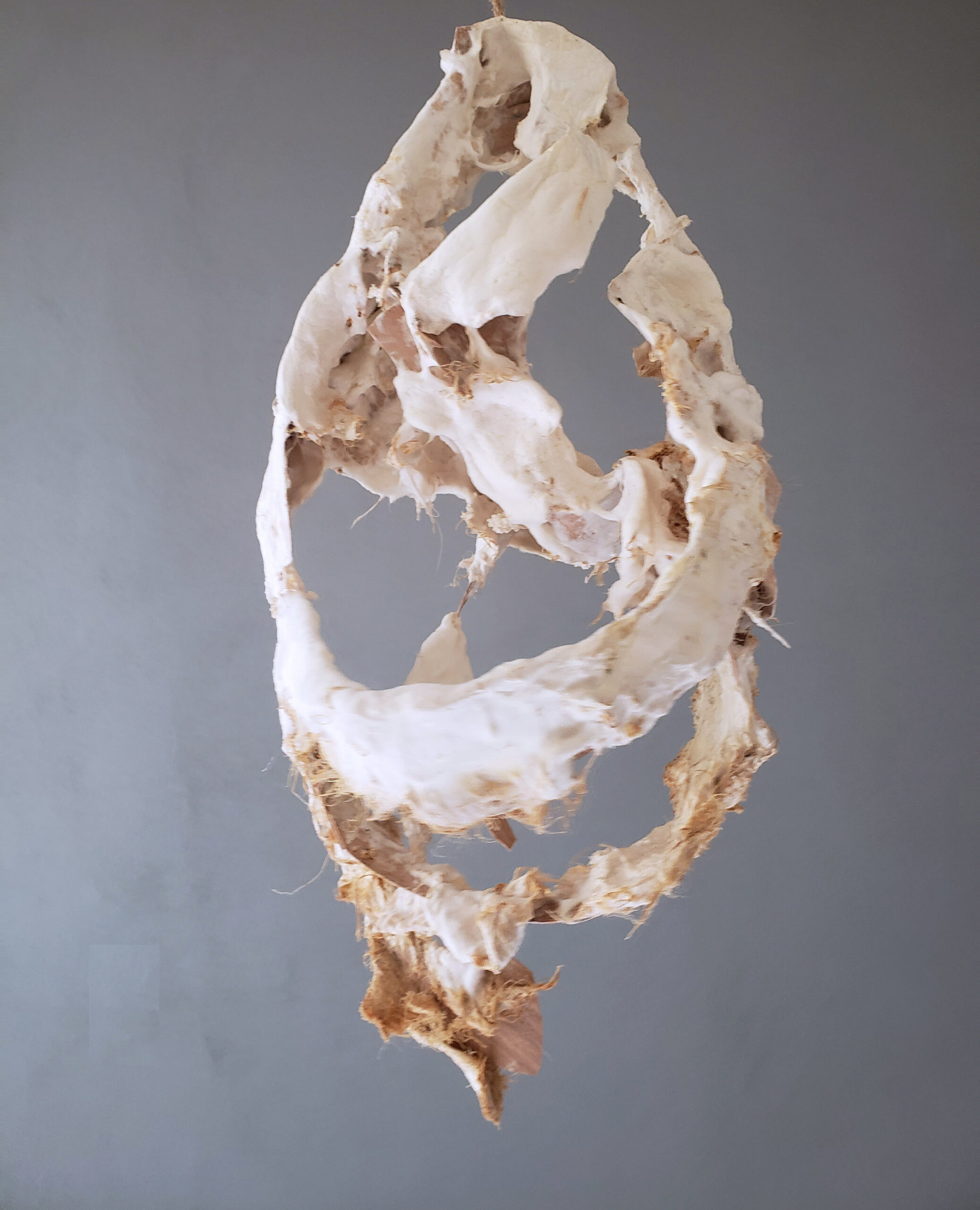
Mycoacoustic Breathing Organ — work in progress, 2026. Beech veneer, hemp-based substrate and Pleurotus ostreatus mycelium.
This ongoing prototype begins with a skeletal armature constructed from curved strips of beech veneer. Hemp substrate colonised by oyster mushroom mycelium is applied by hand and then incubated under controlled conditions. As the fungus grows, it connects the substrate with the wooden framework and develops a porous surface whose final density and appearance cannot be fully predetermined.
3. Towards Mycoacoustic Organs
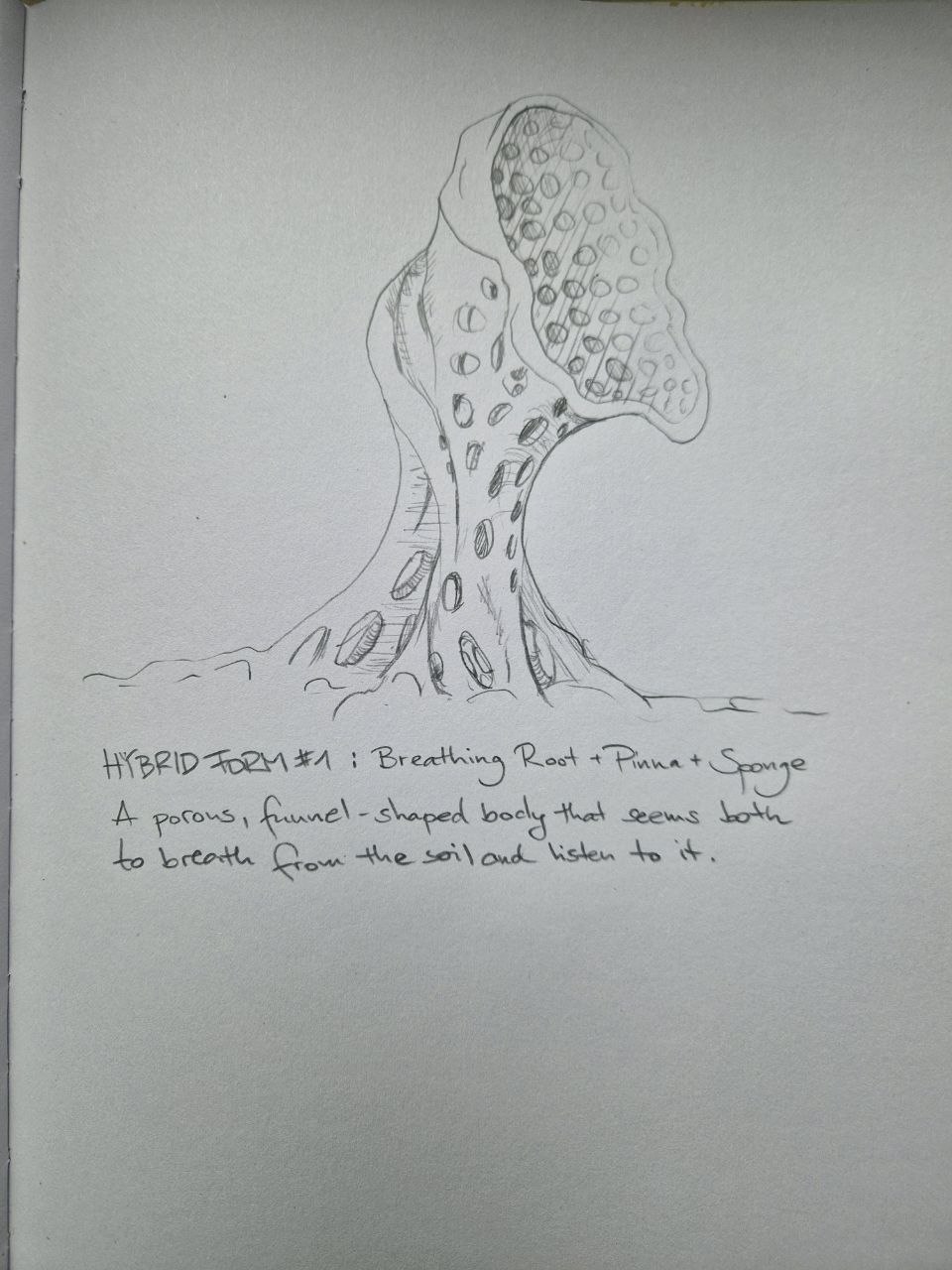
A porous, funnel-shaped body that seems both to breathe from the soil and to listen into it.
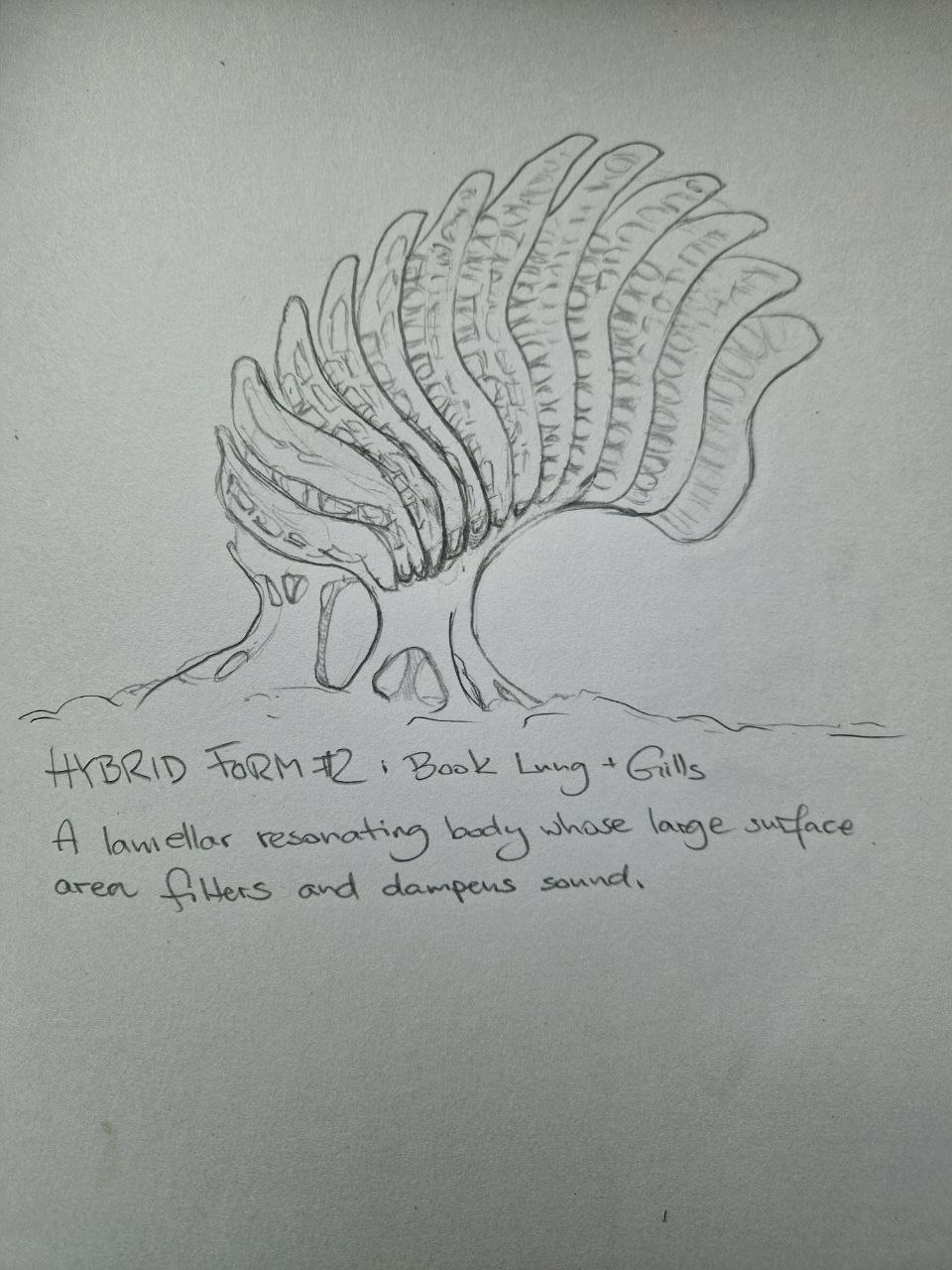
A lamellar resonating body whose large surface area filters and dampens sound.
These ongoing experiments form the basis for a new investigation into mycelium as an acoustic material. Its porous structure can absorb, dampen, scatter and filter sound. Rather than concealing these properties inside conventional loudspeaker housings, I aim to make them spatially and visually perceptible. The proposed forms combine principles derived from respiratory, sensory and filtering structures without reproducing specific organisms. They operate as speculative organs whose growth, porosity and geometry shape the sound that passes through them.
How do density, pore size, wall thickness and cavity shape influence absorption, damping, scattering and resonance? And how do these acoustic properties change during growth and drying? I approach these questions through bounded openness: the armature establishes a field of possibilities, while the fungus participates in shaping both the sculptural form and its sonic behaviour.
4. Proposed Installation: The Soil Is Breathing
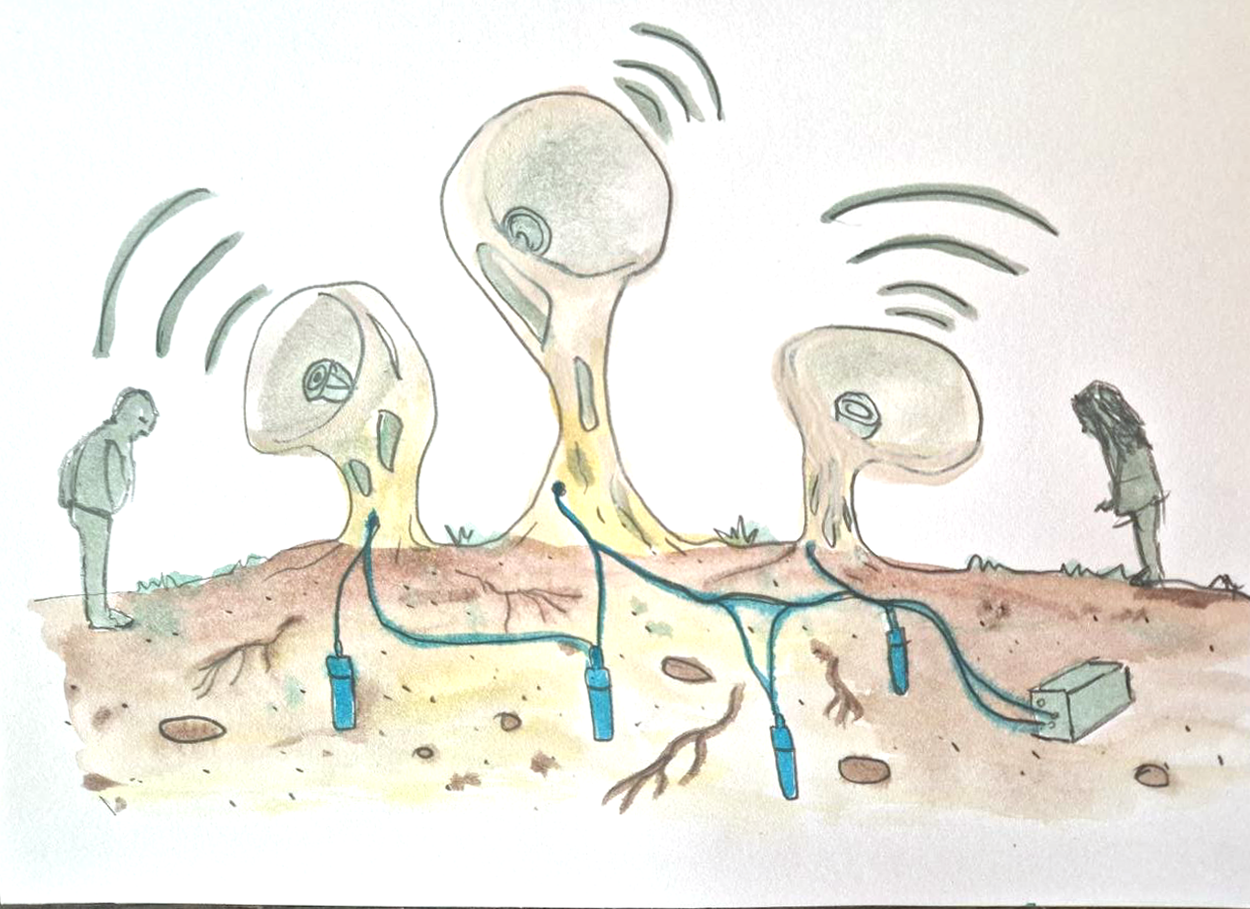
The Soil Is Breathing — proposed installation for Ars Biologica.
Controlled soil microcosms are monitored through oxygen, carbon dioxide, moisture and temperature sensors. The changing measurements generate a spatial sound composition transmitted through mycelium acoustic bodies. Their grown surfaces and porous structures physically filter and colour the sound. The installation does not claim to reveal the literal voice of microorganisms; it creates a situated artistic translation of transformations that normally remain beyond human perception.
5. Previous Research: MUTUAL RESONANCE
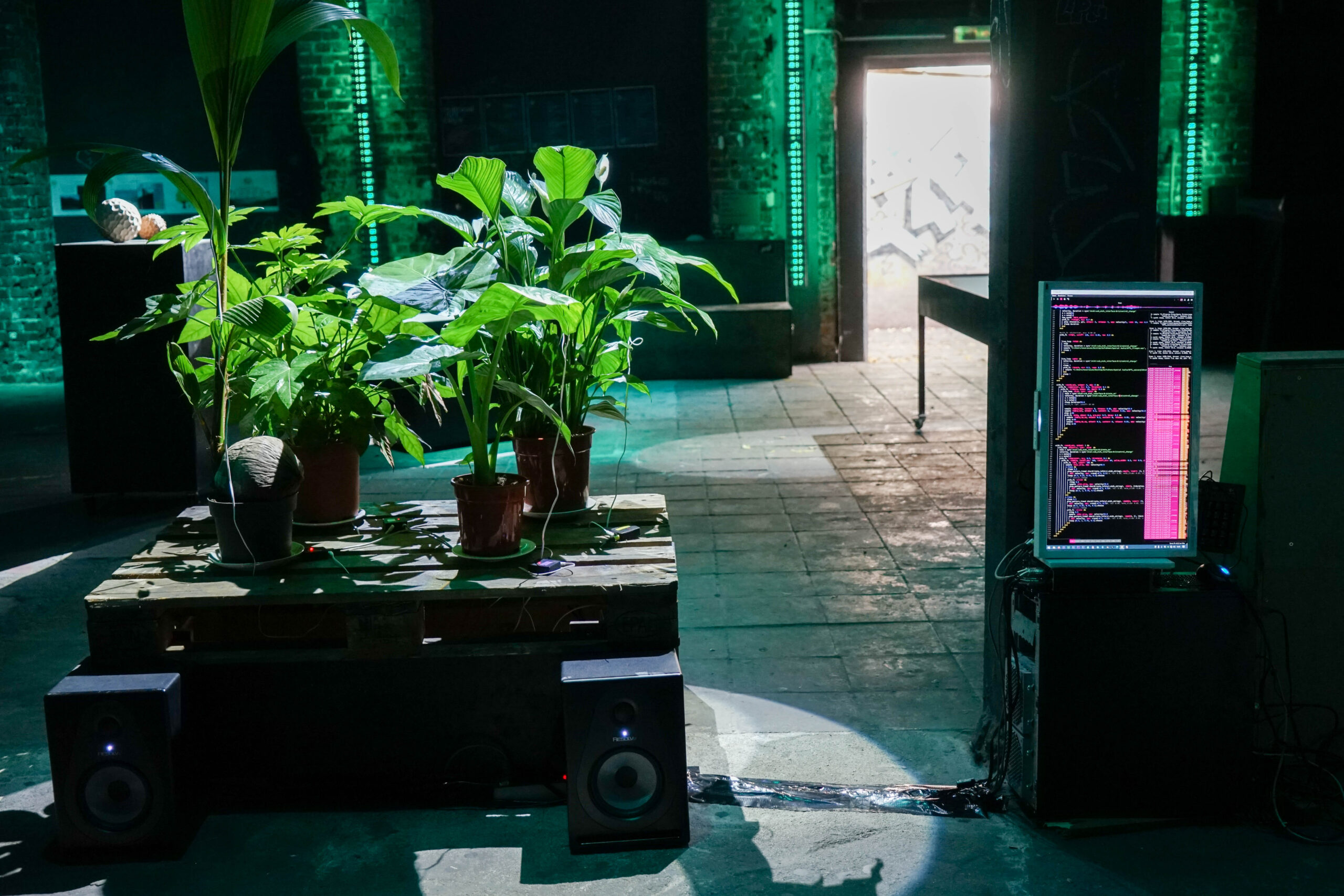
The project forms the technological and artistic foundation for the proposed sonification of microbial soil conditions.
Photo: Anahi Mou